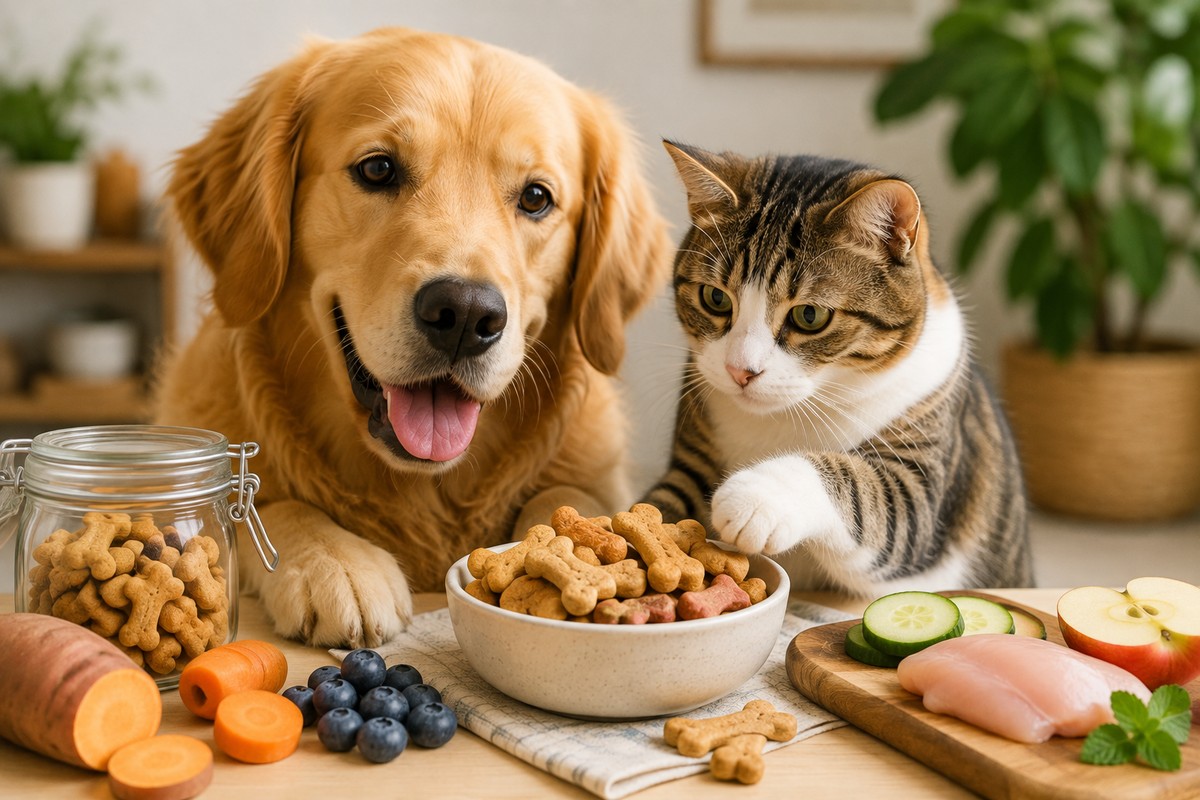
# Healthy Treats: Choosing Better Snacks for Your Pet
Treats can be a wonderful way to reward your pet, support training, and strengthen your bond. However, treats should complement a balanced diet rather than replace it.
Choose Treats Suitable for Your Pet
Different animals have different nutritional needs.
Choose treats that are specifically made for your pet's species, age, and size. A snack that is suitable for a dog may not be appropriate for a cat, bird, or another type of pet.
Check the Ingredients
Before buying treats, take a moment to check the ingredient list.
Look for products with appropriate ingredients and avoid treats containing ingredients that may be unsuitable for your pet. If your pet has specific dietary requirements, ask your veterinarian for guidance.
Keep Portions Small
Treats should generally make up only a small part of your pet's overall diet.
Large or frequent treats can contribute to excessive calorie intake and weight gain. Use small portions, especially during training sessions.
Use Treats for Training
Treats can be an effective reward when teaching dogs and other pets appropriate behaviors.
Reward your pet immediately after the desired behavior so they can associate the reward with the action. As your pet learns, you can gradually reduce how often treats are given.
Consider Fresh Options
Depending on the species and individual dietary needs, some pets can enjoy small amounts of suitable fresh foods as occasional treats.
Always check whether a particular food is safe for your pet before offering it.
Avoid Giving Human Junk Food
Many common human snacks are not suitable for pets.
Avoid sharing foods that are high in salt, sugar, fat, or artificial ingredients. Some foods can also be dangerous or toxic to certain animals.
Don't Forget Fresh Water
Treats are only one part of good pet care. Make sure your pet has access to clean, fresh drinking water throughout the day.
Watch Your Pet's Response
Every pet is different. When introducing a new treat, start with a small amount and observe your pet for any unusual digestive or behavioral changes.
If you notice a concerning reaction, stop offering the treat and seek veterinary advice.
Final Thoughts
Treats can make training and everyday interactions more enjoyable, but moderation is important. Choosing suitable snacks, keeping portions controlled, and considering your pet's individual needs can help make treats a healthy part of their routine.
A good treat should be something your pet enjoys while still supporting their overall well-being.